The post Solera’s Bill Brower Awarded PropertyCasualty360’s 2025 Insurance Luminaries Honoree appeared first on Solera.
]]>
WESTLAKE, Texas – July 15, 2025 — Bill Brower, Senior Vice President of Global Industry Relations and Claims Solutions at Solera, has been named to PropertyCasualty360’s Insurance Luminaries Class of 2025 in the category of Claims Innovation. As an integral part of Solera, the global leader in vehicle lifecycle management, Bill is being recognized for the third consecutive year for his commitment to forward-thinking claims innovation. He has played a significant role in the evolution of claims workflows by embracing technology and artificial intelligence (AI), thereby paving the way for a more efficient and sustainable future for the insurance industry. His commitment has ultimately benefited policyholders, communities, and Solera’s partners.
PropertyCasualty360’s Insurance Luminaries Class of 2025 recognition celebrates innovation in the property and casualty insurance industry. The program spotlights top professionals, teams, organizations, programs, practices and products within the sector that strive to modernize and humanize the business.
The 2025 honorees were selected by a panel of industry experts based on how well they stated and achieved goals with regards to the nomination category; how impactful their work has been; how dedicated the nominee has been to furthering modernization and humanization in the P&C insurance business; and how committed and dedicated the nominee has been to high ethical standards, service and excellence.
“Insurance is a complex and intricate industry with what seems like a million moving parts,” says Editor in Chief Elana Ashanti Jefferson. “That’s why my team and I enjoy hosting the annual PropertyCasualty360 Insurance Luminaries honor. This professional recognition program allows us the chance to spotlight companies, organizations, programs, practices, teams and individuals that truly make a difference in insurance. These honorees pay homage to the industry’s critical mission to make insureds whole after a major loss while powering forward with fresh ideas and modern tools for tackling today’s challenging business conditions.”
For over 30 years since he began his career in the industry, Bill Brower has made impactful contributions that have transformed the way claims are handled. He has set the standard for continuous innovation in the insurance industry and has pioneered efforts toward digital processes, along with his characteristic advocacy for touchless claims.
“It’s an incredible honor to be recognized by PropertyCasualty360 as an Insurance Luminary for the third year in a row. Claims is where the promise of insurance meets the moment of truth, and I’m proud to be part of an industry that is embracing innovation to serve customers with greater empathy, speed, and accuracy. This recognition reflects the outstanding teams I have had the privilege to work with—Solera being among the greatest—because these teams are committed to modernizing the claims experience while never losing sight of the human impact behind every loss.” — Bill Brower.
About Solera:
Solera is the global leader in vehicle lifecycle management software-as-a-service (SaaS), data, and services. Through four lines of business – vehicle claims, vehicle repair, vehicle solutions, and fleet solutions – Solera is home to many leading brands in the vehicle lifecycle ecosystem, including Identifix, Audatex, DealerSocket, Omnitracs, LoJack, Spireon, eDriving/Mentor, Explore, cap hpi, Autodata, and many others. Solera empowers its customers to succeed in the digital age by providing them with a “one-stop shop” solution that streamlines operations, offers data-driven analytics, and enhances customer engagement, which Solera believes helps customers drive sales, promote customer retention, and improve profit margins. Solera serves over 280,000 global customers and partners in 120+ countries. For more information, visit https://www.solera.com/.
The post Solera’s Bill Brower Awarded PropertyCasualty360’s 2025 Insurance Luminaries Honoree appeared first on Solera.
]]>The post Aseguradoras toman el camino verde – Impulsando la sostenibilidad en los seguros de automóviles: una oportunidad de mercado appeared first on Solera.
]]>Solera ha llevado a cabo un exhaustivo estudio que revela una amplia gama de información sobre las oportunidades de negocio y los desafíos que actualmente confrontan las aseguradoras de automóviles en su esfuerzo por disminuir la huella de carbono y las emisiones de alcance 3 en la gestión de siniestros. Asimismo, proporciona una comprensión profunda de las expectativas manifestadas por los clientes al elegir proveedores de seguros comprometidos con el medio ambiente.
1. El impulso de los seguros sostenibles
En un mundo cada vez más centrado en la sostenibilidad, los conductores buscan opciones más ecológicas tanto en sus vehículos como en sus pólizas de seguro. Las ventas de vehículos eléctricos (VE) se han disparado, triplicando la cuota de mercado entre 2020 y 2022, representando ahora el 14% de las ventas mundiales de automóviles (Agencia Internacional de la Energía). Sorprendentemente, el 75% de los conductores están dispuestos a cambiar o permanecer con una aseguradora que demuestre sus credenciales de sostenibilidad.
2. La respuesta de las aseguradoras
Las aseguradoras de automóviles están reconociendo la oportunidad de ofrecer soluciones ecológicas y la importancia de la sostenibilidad. Sorprendentemente, el 99% de los responsables de la toma de decisiones en estas empresas priorizan la mejora de las métricas de sostenibilidad, y el 64% lo consideran “muy importante”. Están tomando medidas invirtiendo en energía renovable, explorando pólizas de seguro ecológicas y priorizando las reparaciones con materiales reciclados. Se está llevando a cabo una revolución en las reparaciones, que se alinea con la demanda de prácticas más ecológicas.
3. Baches en el camino
Si bien el camino hacia la sostenibilidad es claro, las aseguradoras enfrentan desafíos. Las preocupaciones sobre los costos y el acceso limitado a los datos de emisiones plantean obstáculos. La falta de interés de las personas con información privilegiada y las directivas de la alta dirección obstaculizan el progreso. Y más de la mitad se siente abrumado, arriesgándose a perder la oportunidad de satisfacer la demanda de un seguro de automóvil ecológico.
Complete el formulario para descargar el Estudio
4. Data: la clave de la sostenibilidad
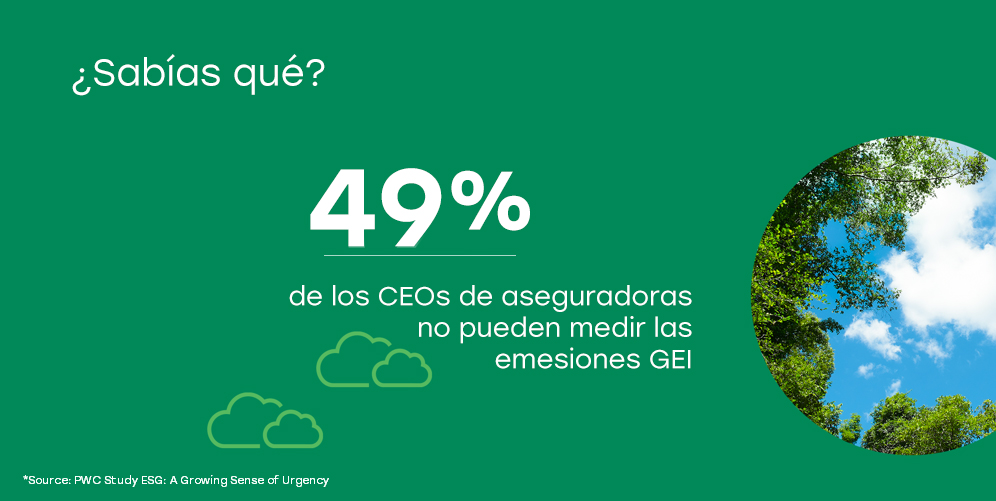
Los datos desempeñan un papel fundamental en los esfuerzos para alcanzar la sostenibilidad. Afortunadamente, el 80% de las aseguradoras de automóviles de todo el mundo están mejorando el seguimiento de datos para la sostenibilidad en siniestros y reparaciones. Se espera que este compromiso se traduzca en un mayor seguimiento de los datos de emisiones en el próximo año. Sin embargo, persisten los desafíos en la medición de las emisiones de alcance 3, que son críticas pero difíciles de rastrear.
5. En resumen
La sostenibilidad ya no es opcional, es un imperativo. En el sector de los seguros de autos, también es una oportunidad de mercado. Al ofrecer políticas basadas en la sostenibilidad y aprovechar los conocimientos de los datos las aseguradoras pueden seguir siendo competitivas. Siguen existiendo desafíos, pero la colaboración con socios como Solera puede desbloquear los datos de emisiones e impulsar la sostenibilidad. No pierdas la oportunidad; Adopta la sostenibilidad en el seguro de automóviles hoy.
Complete el formulario para descargar el estudio completo para que las Aseguradoras profundicen en el mundo de los seguros sostenibles. Solera está aquí para apoyar a las aseguradoras en su viaje hacia la reducción de la huella de carbono en la gestión integral de siniestros
The post Aseguradoras toman el camino verde – Impulsando la sostenibilidad en los seguros de automóviles: una oportunidad de mercado appeared first on Solera.
]]>The post Insurers in the Green Lane – Driving Sustainability in Motor Insurance: A Market Opportunity appeared first on Solera.
]]>In this comprehensive study by Solera, you’ll uncover a wealth of insights into the business opportunities and challenges that motor insurers currently encounter on their path to reducing carbon footprint and Scope 3 emissions in claims management. Moreover, you’ll gain a profound understanding of the demands voiced by customers when it comes to selecting environmentally conscious insurance providers.
1. The Drive for Sustainable Insurance
In a world increasingly focused on sustainability, drivers are seeking greener options in both their vehicles and insurance policies. Electric vehicle (EV) sales have surged, tripling market share between 2020 and 2022, now representing 14% of global car sales (International Energy Agency). Surprisingly, 75% of drivers are willing to switch to or stay with an insurer that proves its sustainability credentials.
2. The Response from Insurers
Auto insurers are recognizing the opportunity to offer eco-friendly solutions and the importance of sustainability. Remarkably, 99% of decision-makers at these companies prioritize improving sustainability metrics, with 64% considering it “very important.” They’re taking action by investing in renewable energy, exploring green insurance policies, and prioritizing repairs using recycled materials. A repairs revolution is underway, aligning with the call for greener practices.
3. Bumps in the Road
While the path to sustainability is clear, insurers face challenges. Cost concerns (32%) and limited access to emissions data (22%) pose hurdles. Insiders’ lack of interest (27%) and senior management directives (30%) hinder progress. Over half (55%) feel overwhelmed, risking missing out on meeting the demand for eco-conscious car insurance.
Complete the form to download the Study

4. Data: The Key to Sustainability
Data plays a pivotal role in sustainability efforts. Fortunately, 80% of car insurers globally are enhancing data tracking for sustainability in claims and repairs. This commitment is expected to result in more emissions data monitoring in the coming year. However, challenges persist in measuring Scope 3 emissions, which are critical yet difficult to track.
5. In Summary
Sustainability is no longer optional; it’s an imperative. In the car insurance sector, it’s also a market opportunity. By offering policies rooted in sustainability and leveraging data insights, insurers can stay competitive. Challenges remain, but collaboration with partners like Solera can unlock emissions data and drive sustainability forward. Don’t miss the opportunity; embrace sustainability in motor insurance today.
Fill in the form to download the full study for Insurers to delve deeper into the world of sustainable auto insurance. Solera is here to support Insurers in their journey to reduce the carbon footprint in the Claims management Journey. In the following weeks the Study will be available for to download in Spanish, French and German.
The post Insurers in the Green Lane – Driving Sustainability in Motor Insurance: A Market Opportunity appeared first on Solera.
]]>The post Protection from nuclear verdicts: Why compliance isn’t enough appeared first on Solera.
]]>The term “nuclear verdict” is generally defined as a damage award exceeding $10 million. It’s also been defined less precisely as “a high damage award that exceeds rational parameters … inflated, outlandish or even destructive.”1 Any litigator or defendant who’s been on the losing side of a nuclear verdict would likely go with the second description.
Nuclear verdict is a more recent term for a phenomenon going back to at least the 1980s, with the 1984 $180-million Agent Orange settlement against the chemical’s manufacturer. One year later, a $10.5 billion settlement in favor of one oil company against another in a business dispute became the largest-ever monetary award up to that point. Over time, a certain irrationality set in. In 2011, a jury awarded $150 billion2 in damages to the family of a burn victim, larger than the $145 billion settlement in the Florida tobacco case.
The trucking industry has not been immune to this trend. In fact, it exemplifies the destructive effect that nuclear verdicts can have on an industry essential to the national economy and basic, everyday life. The fact is, we are living in the Nuclear Verdict Age and it impacts all of us.
The Billion-Dollar Trucking Verdict
In 2021, a jury in Florida helped set a trucking industry record: a $1-billion3 verdict against a Canadian trucking company, Kahkashan Carriers, and a Staten Island, NY, company, AJD Business Services. The victim was a Florida college student. AJD was hit with 90% of the verdict in a quirk but was no longer in business. Kahkashan and its driver were responsible for the rest, $900 million and $100 million respectively.
The quirk is meaningless. And no one is dismissing the loss of life that occurred or the need for justice and fair compensation for those who have suffered injury or loss. Fair compensation is an essential part of the system; enriching personal injury attorneys beyond all reason is not. Yet this verdict was 10 times larger than a $90-million4 decision against a trucking company in Texas just three years earlier. The biggest problem with verdicts like these is that they pave the way for even larger, more incomprehensible verdicts.
Reptile Theory: Godzilla Goes to Court
If you Google the phrase “Reptile Legal Theory,” you’ll get a lot of scholarly articles with stock images of actual reptiles. LexisNexis features a confident-looking Godzilla5. The images are apt.
Reptile Theory was first thrust upon the legal world in the book Reptile: The 2009 Manual of the Plaintiff’s Revolution by plaintiff attorney Don Keenan and theatrical director-turned-jury consultant David Ball. In a May 2022 article, the National Law Review6 described reptile legal theory this way: “…authors Don C. Keenan and David Ball advocate persuading jurors by appealing to their “reptile brains”—the “oldest” part of the brain and the part responsible for primitive survival instincts.”
Primitive survival instincts are hardly a prelude to rationality and reason. They’re a response to the fear and panic we feel when threatened. In reptile legal theory, the goal is to make the jury members themselves feel as though their very lives were threatened by the actions of the defendant and respond with a verdict to match their emotion. It’s not surprising that a study by the American Transportation Research Institute found that “when children are involved in a crash, either being injured or killed, the size of the verdict increases 1,687 percent, from $2.3 million to $42.3 million.”7
Keenan and Ball claim their reptile approach is responsible for $7.7 billion5 in verdicts and settlements. It’s certainly spawned an industry of legal strategizing to defang it, but in the meantime, verdicts based on emotion instead of reason keep rising.
Another driver of nuclear verdicts may be “litigation funding.”8 Basically, ultra-large verdicts are now seen as an investment opportunity by firms who are willing to fund expensive litigation for a share of the settlement. Frankly, even if a purely financial incentive for outrageous settlements that let wealthy third parties turn the death of a stranger into a payday is legal and profitable, it’s also part of the problem.
The Impact of Nuclear Verdicts
The costs of nuclear verdicts against trucking companies can ricochet through the economy. The trucking companies, their customers, their customers’ customers, and the insurance companies all pick up some of the cost. That adds cost pressures to insurance rates, shipping rates, and eventually, the prices of products down the line.
They also destabilize the industry. Larger trucking companies may be able to handle a verdict that exceeds their coverage, but not easily. For smaller companies, if the cost of responding to litigation didn’t do them in, a settlement may. If they have to be absorbed by a larger carrier, industry consolidation tightens.
To Protect Against Nuclear Verdicts, Move Past the Myths
Here’s a popular misconception among carriers: Operating an FMCSA-compliant fleet will protect you from punitive damages and nuclear verdicts in post-crash litigation. It won’t.
Plaintiff’s attorneys have identified two paths to punitive damages they’ll pursue simultaneously:
- They’ll attempt to demonstrate that the carrier is consciously indifferent to the safety implications of the choices they make.
- They attempt to prove that the carrier is incompetent to manage the complexity of the business and that they put company profits ahead of safety.
During depositions, the plaintiff’s attorneys will ask the carrier’s safety director if they’re aware of other carriers who have dramatically improved their safety performance by investing in proven safety programs and technologies, such as video-based safety. If they answer that they’re NOT aware, well, they’re responsible for safety at a trucking company and it’s their job to know. They’ll be painted as incompetent. On the other hand, if they acknowledge that they are aware yet chose to do nothing, then they knowingly acted in a way that put the public at risk. The attorneys will paint them as indifferent, practically an invitation to a Reptile strategy.
In these situations, mere compliance is not a workable defense in court. The laws on negligence leave plenty to exploit, so to protect themselves, carriers must go beyond compliance and demonstrate they did everything a “reasonable person” would do to protect the public.
Why Compliance Is Not Enough
Here is why the myth that an FMCSA-compliant fleet is enough to make safety programs or technologies unnecessary fails in court.
A long-ago lawsuit (in the United Kingdom) established a legal standard of negligence called “duty of care” that was essentially adopted in the U.S. and is referred to as the “standard of care” we still use today to establish negligence9:
standard of care (n): “the watchfulness, attention, caution and prudence that a reasonable person in the circumstances would exercise. If a person’s actions do not meet this standard of care, then his/her acts fail to meet the duty of care which all people (supposedly) have toward others. Failure to meet the standard is negligence …”10
In either situation 1 or 2 that I described above: a company knows that additional safety technology and training really could save lives and did nothing; or they failed to exercise the professional competence to investigate. Their acts are considered negligent, regardless of FMSCA compliance.
Bottom line — complying with minimum requirements will NOT provide insulation from exposure to nuclear verdicts. In fact, doing only what’s required by FMCSA is the highest-risk position a carrier can take. The No.1 way to avoid a nuclear verdict is to prevent the high-severity crashes that create the exposure and to proactively invest in proven technologies and programs. The unfortunate reality is that bad things can and do happen to good companies. Make sure that you can credibly demonstrate in post-crash litigation that you are neither indifferent nor incompetent.
Watch Don Osterberg discuss nuclear verdicts in this related interview.
Endnotes
- The Nuclear Verdict blog series Part I – “Old Wine, New Bottles”, George R. Speckart, Ph.D. & Bill Kanasky, Jr., Ph.D. CourtroomSciences.com
- https://www.law.com/texaslawyer/2021/04/01/revisiting-middleton-the-largest-verdict-in-history/
- Update: Trucking company facing $900M-plus verdict didn’t take part in trial FreightWaves, John Kingston, Aug. 25, 2021
- Jury verdict against Werner for Texas fatal crash is the biggest in company history, John Kingston, FreightWaves, May 18, 2018
- The Reptile Theory: A Game-Changing Strategy in Personal Injury Lawsuits, LexisNexis February 21, 2020
- The Reptile Brain Strategy: Why Lawyers Use It and How to Counter It Thursday, May 5, 2022, September 30, 2022 Volume XII, Number 273, National Law Review
- Understanding the Impact of Nuclear Verdicts on the Trucking Industry, p 21, figure 8, American Transportation Research Institute, June 2020
- Litigation Funding and Social Inflation: What’s the Connection? July 21, 2021, Jeff Dunsavage The Triple-I Blog
- Understanding the Impact of Nuclear Verdicts on the Trucking Industry, American Transportation Research Institute, June 2020, Page 10
- ALM Law.com Legal Dictionary, Gerald And Kathleen Hill
The post Protection from nuclear verdicts: Why compliance isn’t enough appeared first on Solera.
]]>The post Protection from nuclear verdicts: Interview with Don Osterberg appeared first on Solera.
]]>We reached out to Safety Advisor Don Osterberg to discuss this major concern among fleets – one where fleet safety, operating costs, and the law all intersect.
In the video below, we discuss the meaning of “nuclear verdict” and related legal concepts such as “Reptilian Theory” and “standards of care.”
Don describes some effective techniques for fleets to defend themselves from such a legal scenario. We address the impact a nuclear judgment can have on a fleet, especially when the company may not have enough insurance to cover it.
Other good questions we cover include: Can drivers be considered individually responsible? If a fleet follows all FMCSA regulations, does that mean it is meeting “standard of care” requirements? What techniques or technologies have fleets been able to leverage to protect themselves from these nuclear verdicts?
Bad things can (and do) happen to good carriers. They need to be vigilant about their reputation and ensuring their ability to summarize the proactive measures that they take in order to avoid being accused of being either indifferent or incompetent.
Don Osterberg, Safety Advisor
Find more information on this important topic from Don Osterberg by clicking here.
The post Protection from nuclear verdicts: Interview with Don Osterberg appeared first on Solera.
]]>The post Qapter AI-powered claims solutions: Overcoming skilled labor shortages, inflation, and excess C02 emissions appeared first on Solera.
]]>Solera’s artificial intelligence (AI)-powered technology is here to help. The company’s AI tools Qapter® Intelligent Triage and Intelligent Estimating are helping industry players offset skilled labor shortages, optimize parts ordering, and reduce carbon dioxide (CO2) emissions, all while improving and expediting claims and repair processes for customers.
Skilled Labor Shortages
Before the pandemic, unemployment was solidly in the single digits and many industries were experiencing mass labor shortages. A Newsweek magazine article quoted data from the U.S. Bureau of Labor Statistics which set the unemployment rate at about 3.6 percent in September 2019. As COVID-19 swept across the world’s workforce and shut down a huge portion of the automotive and insurance industries, thousands of employees – across everything from insurance companies to repair shops – retired and left the industry. Now that the pandemic restrictions are lifting, the industry is struggling to backfill skilled labor positions.
In July 2022, the unemployment rate hit 3.5 percent, even lower than in 2019. In fact, Autobody News cited representatives from Universal Technical Institute who predicted that “a wave of retiring baby boomers will create 100,000 auto technician job openings over the next decade or so.” Further, the Bureau of Labor Statistics is projecting a “four percent decline in employment in the overall auto technician field through 2029.”
Enter Qapter’s suite of AI-powered solutions. These tools leverage the latest AI technology, are fueled by Solera’s vast data lakes, and are backed by trained and experienced data scientists and industry experts. Qapter Intelligent Triage, one of the solutions suite’s primary pillars, was designed to improve the speed and accuracy of triage decisions following the first notice of loss (FNOL). This service alleviates labor pressure on estimators in two critical ways.
First, Qapter Guided Image Capture empowers the policyholder to launch the claim process and submit photos of vehicle damage following FNOL. Then, using the latest image processing technology and machine learning algorithms Intelligent Triage detects total losses, repairable vehicles, or advises further inspection by an assessor. The solution’s ability to manage the process with minimal human involvement reduces workloads for insurers; and, by identifying a total-loss vehicle at FNOL, the tool eliminates the added workload and cost of towing a totaled vehicle to a body shop and thus later incurring additional towing charges to get the car to a salvage yard.
Eliminating unneeded tows can reduce repair shop workloads and drive serious cost savings. Consider the savings on 10,000 claims in the U.S., where average towing fees run about $109 for a single trip. That means the total towing bill from those 10,000 incidents would cost just over $1 million. If the vehicle must be transported twice – once to the body shop for evaluation and then to the salvage yard as a total loss – it would cost the insurer more than $2 million. According to these numbers, Intelligent Triage can help companies potentially eliminate unnecessary towing of total-loss vehicles to the body shop and instead deliver them straight to the salvage yard, saving more than $1 million.
In other markets, such as Mississauga, Ontario, Canada, a tow to a single location costs about $400 and taking a vehicle to two places (body shop then salvage yard) costs about $750. The same aforementioned example of 10,000 claims would generate savings from about $2.5 million to more than $4 million in that market. If one were to extrapolate those savings across the industry, the savings would be staggering.
Beyond FNOL and triage, another pillar of Solera’s suite of AI-powered tools called Qapter Intelligent Estimating is helping insurers overcome estimator skillset shortages by automatically advancing the claims process. After the insured submits photos of the damage, the platform automatically creates a preliminary repair estimate based on those images in under three minutes. The initial automated estimate eliminates the need for veteran adjusters to develop outmoded manual reports and empowers the less-experienced insurance adjusters and estimators to initiate and advance the job confidently. The previously required veterans of their respective industries can now be freed up to focus on more complex claims and heavily damaged vehicles.
Inflation costs
According to the U.S. Bureau of Labor and Statistics, the U.S. inflation rate increased by 9.1 percent for all urban consumers over the course of 12 months immediately prior to June 2022. Globally, rates also increased to similar levels. This was the highest reported 12-month inflation increase in the U.S. since November 1981 – more than 40 years ago. The cost of owning and maintaining a vehicle at those levels therefore skyrocketed. According to the same report, prices for new and used cars and trucks jumped 11.4 percent and 7.1 percent, respectively. The parts and equipment for those vehicles increased 14.9 percent, and the cost of the gasoline to make them all go grew by 59.9 percent representing the largest 12-month increase since March 1980.
These combined inflation increases have had widespread impact, especially on the insurance industry. According to GEICO, a top-five auto insurer, rising used-car prices and auto parts shortages resulted in increased claims costs and thus higher underwriting losses than the prior year.
Inflation combined with the shortage of auto parts translates into significantly higher repair prices for insurance customers. According to James Davies, CEO of research firm, We Predict, the annual average of repair cost inflation for 2021 was 11 percent.
Qapter Intelligent Estimating can help insurance companies and repair shops limit the impact of inflation by optimizing repair decisions to help reduce the demand for new parts. The platform looks at damages objectively and recommends the most optimal repair operation using real repair research data.
CO2 impact
Sustainability and the reduction of greenhouse gases (GHG) are a clear focus for most industries and consumers right now. The automotive industry is embracing the global effort to achieve an 80-percent reduction in carbon emissions by 2050. Accordingly, Solera is identifying ways it can help the collision repair industry meet its environmental, social, and governance (ESG) objectives. By introducing AI-powered technologies into the mix, companies can play a meaningful role in the collision repair industry by helping to limit global warming and responding to the impacts of climate change.
Qapter Intelligent Estimating’s ability to autonomously create an accurate, detailed list of required repair parts also helps address the GHG emissions issue. According to research published in 2018 by the International Journal of Automotive Engineering Japan, the average CO2 generated across the entire journey from manufacturing to installation to replace an external body part is about 1.125 kilograms in Japan.
Tools that help repair shops limit parts ordering to only the exact ones actually required to complete a repair can have a big impact. Suppose Intelligent Estimating can reduce the unnecessary use of a single external body part across 10,000 repair claims in Japan using the above metrics. In that case, the solution could reduce the production of more than 11,250 kilograms – or over 12 tons – of CO2 emissions.
As referenced previously, Qapter Intelligent Triage can help reduce the number of unnecessary tow truck trips, thus reducing costs and shortening key-to-key times for both the insurance company and the consumer. The environmental benefits are also significant: Tow trucks have a substantial carbon footprint, especially when towing vehicles. Using technology to eliminate what could add up to thousands of unnecessary towing assignments could prevent tons of excessive GHG emissions from entering the environment.
The combined GHG reductions generated by eliminating unneeded tow truck trips and optimizing repair-parts purchasing across the 6 million vehicle accidents in the U.S could significantly impact the industry’s goal of 80 percent reduction in carbon emissions by 2050.
Closing
Technology is unquestionably revolutionizing the vehicle insurance and repair industries. Qapter’s AI-driven technology backed by trained experts creates competitive advantages for leading companies from start to finish. Technology empowers organizations with tools that help impress customers with a hassle-free experience and revolutionize the adjustor-to-repair process. Qapter’s AI and machine-learning features help them overcome labor challenges, offset the impact of inflation on the bottom line, and achieve industry environmental goals of reducing carbon emissions by 80 percent by 2050.
As the collision-repair industry continues to weather the ongoing repercussions of the pandemic and the impact of inflation, Solera Qapter is here to help. For more information on our suite of Qapter technology-driven solutions, visit our website – www.qapter.com.
The post Qapter AI-powered claims solutions: Overcoming skilled labor shortages, inflation, and excess C02 emissions appeared first on Solera.
]]>The post The human side of artificial intelligence appeared first on Solera.
]]>The Solera Insights team had an ideal opportunity to interact with renowned mathematician and bestselling author Hannah Fry for a session about the importance of machines and humans working together in the age of artificial intelligence (AI).
The thought-provoking discussion addressed the significance of approaching AI as a human-first tool and the importance of beginning to accept and leverage AI in everyday life.
Question: Thank you for joining us, Hannah. When it comes to the sophistication of machine learning (ML) algorithms today, we don’t always understand precisely how an algorithm makes its determination from the underlying data we provide. This explains some of the errors we see. It’s only through training sets and additional iterations and tweaking that we can actually improve the algorithms themselves to become 99-percent accurate. So, how should non-mathematicians go about getting our customers to feel confident about the decision-making capabilities of our systems?
Hannah Fry: That’s a great question. I think the first thing to remember is that you’re not comparing a flawed algorithm to some imaginary, perfect system; you’re comparing it to the only other alternative, which is a flawed, human-only system. If you can then use that algorithm to improve on a human-only system, it’s a beneficial addition.
It’s also important to remember that the kinds of things we’ve programmed machines to do for us since the beginning – like mathematics, chess, spreadsheets, etc. – are things that we have a fully conscious understanding of how to do. It’s the subconscious things like vision and perception that are tricky.
Now, we are at the cusp of this whole new world where we’re essentially training machines to do things humans do subconsciously. So, it is about having just a little bit of faith, but also recognizing we’re only asking machines to do what we’re already doing ourselves.
Question: Speaking along the lines of domain: as technology advances, and as you put more and more data through the algorithms, they become increasingly more accurate. However, oftentimes the problem is bounding the domain set itself, because to put random pictures into a system and expect to get precise answers as they relate to the human experience is almost an intractable problem at this stage of technology. What advice can you give us as we look at our solutions involving the very restricted domain of using AI and visual intelligence (VI) to identify damage on vehicles and provide repair recommendations? How do we go about expanding domains so that we don’t get unusable responses? What strategies have you used in the past for achieving this?
Hannah Fry: This really is a challenge we see across the board. It will all work out fine if you account for variables by building them into the training set and then make adjustments as you go along. But beyond that, there’s two important things here:
First of all, it’s recognizing that perfection is an imaginary goal that you’re never quite going to reach; you can always improve these things.
It’s also about recognizing that you’re going to find mistakes. You’re going to find problems, and these things are going to improve over time. But you don’t have to achieve perfection before something can be a useful product.
Question: Perfect. So again, problem sets that the algorithms, AI, and ML can learn – ML today is still inherently deterministic in its nature. You input a certain amount of data, it goes through an algorithmic process and the output will always be consistently the same. It’s deterministic versus nondeterministic unless there’s a bug. But the human brain is a little bit different, right? The human brain can actually take in many more facets of information, and, clearly, the more facets you put in an algorithm, the more information you get out of it. How does one go about determining when you want to use the deterministic versus the human in decision-making problems?
Hannah Fry: I love this question! It’s so hard, isn’t it, because sometimes you want a little bit of randomness! I really think it’s such an interesting idea that sometimes the sophistication of our humanity – the sophistication of our minds – is because we have that little bit of randomness; that sometimes, by chance, we can come across something that is really a brilliant idea. And you’re right, no one has quite worked out yet how to program that in unless it’s already in there as a bug.
Question: One of the examples you used in your book, “Hello World: How to be human in the age of machines,” involved the complex relationship between humans and AI when it comes to advanced driver-assistance systems (ADAS) and, even further than that, driverless vehicles. This is obviously near and dear to what we do here at Solera. Technology itself like this can be disruptive in its nature, its very core. What we’re doing here at Solera is taking technology and being disruptive to the industry. It’s a differentiator for us as a company. We are now at a point with ML, and, more specifically, VI where adoption is critical. So, what is the way forward you see for these types of technologies?
Hannah Fry: That’s a great question – and I do think about the hype cycle whenever something new and fashionable comes along. I think we’re at the point now though where we’ve really reached the plateau of productivity. We’re at a place where the technology exists, it’s mature enough, we’ve ironed out some of the early problems, and people are really putting it to good use and finding out ways to make it properly work.
There’s basically no going back to where we were before. I believe AI in general is as transformative as the microprocessor was in the 1970s, and to not have it as part of your strategy for interacting with the world is a mistake. There’s no going back to the way things were before!
Humans working with machines is essentially the foundation of industrialization, without which our current lives are unimaginable. Developments in AI have already proven helpful across a broad range of applications. The objective is not to replace the human element, but to augment it with expanded capabilities and to free people to do the things they do best – even with a little bit of randomness.
The post The human side of artificial intelligence appeared first on Solera.
]]>The post The unacceptable increase in truck-involved crashes and fatalities appeared first on Solera.
]]>From 2009 to 2019, truck crash fatalities rose by 48%(1). In 2020(2), nearly 5,000 people died in truck crashes, an average of 14 per day. Truck-involved crash injuries soared by 115%, averaging 436(3) per day in the period, reaching 146,000 in 2020(2). In human terms, this means hundreds of thousands of loved ones emotionally devastated, lives disrupted, diminished, or ended every year due to truck crashes.
But why?
Why, during two decades in which truck miles driven rose by 32%(4), did fatalities rise by 48% and injuries by 115%? Keep in mind that during this same period, occupant protection improved, and active safety technologies proliferated into the automobile market. Before we answer the question, let’s look at where and how crashes happen. As trucks, passenger cars, bikers, and cyclists encounter each other, knowing where crashes happen and who’s behind them can help everyone recognize dangerous situations:
- In a high percentage of crashes involving passenger cars and commercial trucks, the car was at fault. However, as professional drivers, we can and should be held to an even higher standard of defensive driving.
- Carriers often route drivers on the shortest routes rather than the safest routes. Only one in four crashes occurs on an interstate highway; 75%(5) of truck crashes are on non-interstate roads.
- Four-way intersections see 27%(6) of crashes.
- Rural roads endure a majority of the country’s fatal truck crashes, 57%(5).
- On the trucks themselves, the initial contact points are 58% front, 19% back, and 15%(6) side collisions.
A 2019 state-by-state map(5) of truck-involved fatalities shows that states near the coast have the lowest truck-involved fatality rates, generally under or just above 10% (Hawaii, 2%; New Hampshire, 4%). Fatal truck crash rates are highest in the Midwest and Mountain states, with Wyoming and Nebraska at 25% and 17%, respectively. Nationally, 9%(5) of fatal crashes involved trucks in 2019. It should be noted that drivers of large trucks in fatal crashes had a much lower rate of alcohol involvement than drivers of passenger cars, light trucks, or motorcycles, which had the highest, at 29%(5). On the other hand, truck drivers in fatal crashes had the highest rate of previous crashes: 23%(5).
Behind the Fall and Rise of Crash Rates
From about 1999 to 2009, crashes, deaths, and injuries involving large trucks declined significantly and then began a sharp climb back up until 2020, when Covid-19 reduced road traffic, and the trendline stabilized. Three things changed that helped push the rates back up in the last ten years.
- Infrastructure: As the Great Recession that began in 2008 started to ease, the trucks of an improving economy were operating on congested, underfunded transportation infrastructure.
- Fatigue: The pressures of “just in time” inventory and the spike in fast home deliveries pushed both carriers and drivers to test the limits of endurance behind the wheel, and speed limits, too. As drivers look for more hours, they can change sleep schedules drastically from week to week, impairing situational awareness and peak function.
- Distraction: Cell phones have become a dangerous source of distracted driving for all types of vehicles. The government is doing the first study in over 15 years(7), but we all know what can happen in the few seconds our eyes are on a device instead of the road. Cognitive distractions from even hands-free cell phones reduce situational awareness and increase the risk of distraction.
Driving Mistakes
Speeding, either above the limit or driving too fast for conditions, ‘tailgating’, and careless lane changes create dangerous situations, for both truckers and cars alike.
Other Factors
Poor vehicle maintenance, tire failure, or improperly loaded freight can cause serious crashes. Alcohol and drugs, prescribed and otherwise, also can cause crashes, but the rate of alcohol-impaired truck drivers involved among truckers was 3% in 2020, while other vehicle-type drivers ranged from 19 to 27%(8). The most important thing to note is that most crashes are caused by human behaviors and decisions, which we have the means to improve.
The High Cost of Crashes
In addition to the human costs, truck crashes damage a business’s brand as well. The estimated cost of police-reported large-truck crashes was $91,112 in 2005(9), according to the last major study on the topic ($140,000 today(10)). A recent American Transportation Research Institute (ATRI) study revealed that truck insurance rates increased 62% from 2009 to 2022(11), reflecting the concurrent rise in crashes and “nuclear verdicts” in post-crash litigation.
Nuclear Verdicts, Punitive Damages, the Paperwork of Lawsuits
Any verdict over $10 million is considered nuclear, and the defendant may not even be at fault. For example, in 2018, a jury in Texas issued a $90 million verdict(12) against a trucking company when, in fact, it was the driver of the passenger car that lost control, crossed a median, and crashed into the truck. Small to midsized companies can be consumed by the costs of responding to litigation record requests and other requirements. And in smaller fleets, the loss of just one vehicle due to a crash can inflict high costs on daily business operations.
Solutions for Crash Reduction
The most important element in reducing crashes is creating and leading a true ‘culture of safety.’ In a report on safe trucking, the FMCSA(13) says, “The norms, attitudes, values, and beliefs of organizations define the culture of an organization and are manifested in the behaviors of its agents.” For a fleet or even a single driver, that means safety is a core value, consistently shown in its actions.
- These are some of the essential steps in building a safety culture:
- Define and communicate the company’s shared values regarding safety
- Develop well-defined policies and rules; communicate them clearly and consistently
- Create a robust safety training program; communicate its importance; make sure it’s accessible
- Ensure drivers are working within DOT Hours of Service regulations
- Collect and analyze fleet safety data for training purposes
- Match driver skill level to trip requirements
- Create a rewards program to recognize safe driving practices
While authentic safety cultures are built over time, there are more immediate steps you can take to reduce crashes:
- Fleet maintenance: Brake problems were a factor in 29% of truck crashes
- Tire care: Proper inflation, reasonable load weights, regular inspection. Tire problems factor into 6%(14) of truck crashes.
- Hiring practices: Past behavior is the best predictor of future performance. Truck drivers with crash histories are at much greater risk of a crash than drivers with clean driving records
- Skill matching: Make sure driver skills are up to trip requirements
Video Safety in Accident Reduction
A comprehensive video safety system provides complete fleet and driver visibility. Video is captured inside the cab, on the road ahead, and ideally on the truck sides and rear, automatically recording notable road incidents for study, coaching, and legal exoneration in a crash. Complete systems include third-party expert examination of recorded incidents and driver activity for additional safety insights.
Once set up, the system functions as a virtual ride-along, observing everything and taking notes. The system keeps an eye on the driver, and may use Artificial Intelligence to provide alerts for speeding, tailgating, lane drifting, U-turns, texting, eyes off the road, signs of drowsiness, inattention, and other unsafe behaviors where coaching will be needed.
Video safety can be especially effective at addressing distracted driving and fatigue, two of the most significant crash risk factors. The camera’s ability to discern distraction and drowsiness is a new capability. As the first technology that provides true insight into driver and vehicle activities to improve safety, every fleet should consider adopting a video safety program.
Most Crashes Are Not Accidents
The most important thing to know is that most crashes are not accidents, but results, primarily of human decisions or actions. Fortunately, through communication, technology, persistence, and reward, we can improve decision-making and actions to reduce the tragic loss of life on our roads.
Watch Don Osterberg discuss truck-Involved crashes and fatalities in this related interview.
Learn more about Fleet Safety.
The post The unacceptable increase in truck-involved crashes and fatalities appeared first on Solera.
]]>The post Where was AI technology for contents claims when I was an Adjuster? appeared first on Solera.
]]>Technology has come a long way. Do you remember your first experience with technology? I do.
During my early days in the claims industry, I still remember my excitement when I got my first pager with text messaging. That relatively simple technology made me infinitely more efficient as a claims adjuster and improved my life in a hundred different ways. For the younger generation, this was during the time before cell phones. Getting a text page was game-changing. It allowed me to take action without first finding a pay phone and calling the office. Yes, that was how we did things in the early days.
The impact of today’s insurance claims technologies eclipses the effects of that pager by about a million times, especially AI-powered tools. Let me give you an example.
When I started my career in claims, I enjoyed working on home structure losses and really hated to see a contents claim hit my desk. Especially the large-loss claims, because that would mean a long list of contents to price. Completing those claims was a very time-consuming, tedious process and way less fun for me than pricing out a structure loss.
That said, we all know how important timely and accurate contents claims are for a property owner. It is critical that we build a complete contents list and provide accurate settlement estimates to ensure our customer is happy and that our settlement offer is fair.
In today’s market, timely, accurate settlements can be challenging. The sheer volume of claims is increasing, companies are moving to leaner, more efficient teams, and employee turnover is exploding. Home contents losses require more manpower and an excessive investment of time, which creates the potential for a bad experience for the policyholder and the insurance company. This is where technology can save the day.
Straight Through Contents by Enservio is a game-changer. It puts AI-powered solutions backed by trained contents claim experts in the hands of insurance claims professionals and policyholders to provide an end-to-end solution for contents claims. This would have been WAY better than a text pager back in my claim’s heyday.
Here’s how it works: The Enservio tool has an intuitive interface that guides the policyholder through inventory capture and completion of in-home inventory lists, and provides fast, accurate pricing. This AI-powered tech gives the property owner control over building the contents list, freeing up adjusters to focus on structural repairs and assist customers with the overall claims process. It makes the adjuster and insurance company look like rock stars to policyholders. For large losses, Enservio provides trained professionals to work in person with your policyholder to complete the inventory list and capture all the necessary model numbers, manufacturer information, and content descriptions.
Solera built this solution by combining digital AI technology with human expertise to provide a risk-free solution across the entire contents claims process. Straight Through Contents streamlines the contents claim process by automating low-risk claims and providing a valid settlement offer in just minutes versus days with less-automated solutions. The Enservio platform enables an optimal business outcome for contents claims, which helps create a superior policyholder experience and expedites workflow.
Check out the attached brochure for more on the benefits of straight-through contents pricing and how you can provide a fast and fair contents evaluation and settlement using Enservio contents solutions.
The post Where was AI technology for contents claims when I was an Adjuster? appeared first on Solera.
]]>The post Environmental considerations for vehicle parts appeared first on Solera.
]]>Solera’s Regional Managing Director, Atul Vohra, spoke with Susan Holliday to get her thoughts on the intersection between vehicle parts and the environment. Ms. Holliday has over thirty years’ experience in global financial services, with a concentration on insurance and financial technology. Ms. Holliday has served on several boards, including the advisory board of Solera, Inc., and is a non-resident scholar for the Insurance Information Institute.
Given your access to many corporate board members, to what extent do you think supply chain challenges are at the forefront of concerns today?
Obviously, these are challenging times for corporate management teams and boards around the world. Boards of directors are grappling with geopolitical events, but, yes, the supply chain issue has truly risen to the fore in the last couple of years in connection to Environmental, Social, and Governance (ESG) considerations as well as geopolitical developments.
In what ways do you see the environment relating to supply chain issues?
Many companies have made net zero commitments, and there are increasing disclosure requirements for listed companies in the UK and EU with similar developments proposed by the SEC in the US. Investors and customers are also asking a lot more questions around the environment and sustainability. One area of increasing importance is recycling and the “circular economy” when it comes to vehicle parts. Starting in Europe, there has been a lot more discussion of how to reuse parts.
Facilitating the reuse of vehicle parts is something we’ve been focused on at Solera as well. Salvage yards using our Hollander Powerlink Yard Management System sell about 46 million used parts per year. What is your view of the benefits of recycling parts and Alternative Parts Utilization (APU) more broadly?
Reusing parts offers dual benefits: reducing supply chain issues and cutting down on emissions. By “supply chain issues,” I mean that parts availability is an increasing issue. And for many drivers, convenience is more important than price. Because of recent supply chain challenges triggered by the emergence of COVID, everything has gone up in price. So now, recycling and aftermarket products may be more readily available. A survey was conducted five years ago by the insurance industry. They asked, “If your car will be a total loss, would you be willing to take used parts?” A very high percentage (75-80%) said yes – they’d rather leverage used parts than lose the vehicle. There’s been a huge drive recently to save power and to cut down on waste. These initiatives continue to promote reuse or recycling of second-hand parts. If we were to conduct the same survey now, the results might be even more compelling.
Who are the main parties involved in this supply chain for recycled parts and what are their concerns?
The primary parties involved are OEM vehicle manufacturers, repair shops, salvage yards, and insurance carriers. Bear in mind that there are three sources for parts: OEM, aftermarket, and salvage. New/OEM parts are more difficult to find and more expensive, plus the timelines on receiving them are much longer. Meanwhile, there’s a definite desire on the part of insurance companies to find alternative sources for vehicle parts to reduce expenses. I’ve seen estimates that recycled parts cost an average of 75% less than OEM. The savings are huge, it’s more environmentally friendly, and with next-day delivery, it can even be quicker, which benefits the insurance company and the end customer. Insurance companies are spending a lot of money on courtesy vehicles if repairs take a long time, when customers would prefer to get their own car back.
That sounds encouraging. Why is this not happening more?
It’s challenging to measure how many cars are actually repaired with used parts, but I’ve heard numbers from 1% to 10%, so there’s definitely potential to better leverage recycled parts. However, there are some challenges. For example, matching required parts to available parts. Not many new cars are total losses, so there are not many second-hand parts available for newer cars. Parts are becoming more specialized with automobiles becoming more technically advanced and diverse, so there needs to be an efficient system to locate the right parts. At the moment, there is no centralized database.
There is also no standard system to certify used parts, so their use on a new car may have an adverse impact on the vehicle’s warranty. On the one hand, the OEMs profit from selling new vehicle parts, but they are also under pressure from supply chains and to reduce emissions, so there should be a role for them to authenticate used parts in the same way that dealers offer quality assurance for used cars.
Yes, our Pinnacle solution solves some of these challenges around identifying all the vehicle parts in the market, but it’s a complex challenge with imperfect and siloed data. How do you see it playing out?
I think various parts of the industry need to come together to address this: OEMs, insurers, dealers, repair shops, and salvage yards. Such collaboration would definitely cut down on emissions (because new parts are often transported across continents). This would also reduce the time and cost associated with settling claims. The key is to build out an industry-wide framework. It needs to be a solution with benefits for everyone involved in the value chain. And, given the complexity of this challenge, it would likely be an opportunity to leverage emerging technologies across AI and Machine Learning (ML).
Even if some of the current supply chain issues driven by COVID and geopolitical conflict are resolved, companies will still be looking at ways to shorten supply chains and to reduce their environmental footprint. Public commitments to reduce emissions are out there, and regulatory and investor pressure on environmental topics will mean that companies need to be creative when it comes to making their businesses more sustainable. Persuading the many parties involved (OEMs, repair shops, salvage yards, and insurance carriers) to work together toward this greater good is a significant challenge still in need of creative solutions, but the urgency and reward associated with succeeding will only grow for the foreseeable future.
The post Environmental considerations for vehicle parts appeared first on Solera.
]]>