The post Inspect What You Expect: Building a Performance‑Oriented Sales Organization appeared first on Solera.
]]>Results don’t come from goals arbitrarily written on a whiteboard. They come from what your team does with those goals in mind, and whether leaders quietly verify the basics got done along the way. That’s the essence of “inspect what you expect.” It isn’t micromanagement, it’s leadership. I learned this running a BDC and sales teams at Serramonte Ford, sharpened it during my time helping dealers on the tech side, and of course still use it today with Solera’s Dealer Solutions partners. Everywhere I’ve sat, one truth holds: when you coach the middle 60% and consistently inspect the standards of your organization, the whole curve moves.
Expectation without inspection is just hope
In dealerships, hope is not a strategy. If you expect speed‑to‑lead in five minutes, appointments confirmed the day before, and notes updated in the CRM by close, then those behaviors need two things: a clear standard and a simple, visible inspection. Set the standard, teach it, and then check it daily—kindly, consistently, and publicly. When people know the bar and know you’ll look, performance becomes repeatable.
Seize the ‘opportunity to act’ and make follow‑through the culture
You can say you value speed-to-lead, but unless you’re inspecting it—pulling the reports, role-playing the responses, listening to the calls—it’s just lip service. You can say you want better structure, but unless you’re checking that handoffs between BDC and sales are tight, you’ll keep losing customers in the cracks. Teams believe what you enforce, not what you announce.
“Don’t just talk about it—be about it” is a sales cliché that’s 100% true. Follow‑through is a habit you design into your day as a leader or an individual contributor:
• Morning huddles: What’s the plan, who owns which deals, and what’s the target?
• 5‑2‑24 rule: Respond in 5 minutes, have two‑way contact within 2 hours, book an appointment within 24 hours.
• Blocked power hours: 2x per day, phones and texting only—no desk noise, no lot walks, no interruptions.
• End‑of‑day audit: Managers pull a few random deals per rep—notes complete, next steps scheduled, customers confirmed. • Day‑after rescue: Any no‑show gets a save‑a‑deal call, a text, and a new appt before 10 a.m.
Structure beats personality (and survives turnover)
Finding the right people matters, but let me be honest: talent alone won’t save you. Most stores over‑rely on a few heroes. I’ve hired natural talkers who never made it past month three because they couldn’t stick to process. And I’ve coached quiet grinders who became consistent top performers because they embraced feedback and knew they’d be measured on it. Inspecting what you expect reveals who’s coachable—and those are the ones who build sustainable growth.
• One‑on‑ones that matter: 20 minutes, weekly, per rep. Pipeline, blind spots, and one behavior to improve.
• Ride‑alongs & listen‑alongs: One per rep per week. Score the basics—greeting, needs, demo, ask, next step.
Hire for habits; develop the rest
This isn’t about micromanagement. It’s about giving your people the chance to succeed with clarity. When inspection is fair and consistent, it creates opportunity. People rise to the level of accountability they see modeled. And when they don’t, you have the insight to act quickly instead of waiting until a bad month turns into a bad quarter.
If there’s one lesson dealers should take into 2026 and beyond, it’s this: don’t just talk about being a performance culture—be about it. Inspect the basics. Follow through on what you say matters. Coach the middle as if they’re the key to your growth—because they are. And remember, your team will always measure their effort against the level of attention you give. Inspect what you expect, and you’ll build an organization that performs at every level.
A quick callback to coaching the middle 60%
In my last piece, I argued that your ceiling is set by the middle, not the unicorns. This is how you lift it: give the middle 60% a clear playbook, rep‑level feedback, and daily inspection that’s fair, fast, and transparent. When average reps do the basics on time, every time, your whole bell curve shifts right—faster than any single hire or spiff will move it.
A closing thought
At Serramonte, a salesperson once told me, “Amanda, I don’t need a script; I’m better from-the-hip.” Two weeks later, his show rate was about 20%. After three listen‑ins and one very short script optimization, he hit over 50% and most of the deals closed. Talent matters. Systems win. If you want a performance‑oriented sales organization, don’t lecture it into existence. Inspect what you expect—kindly, but consistently—and let the scoreboard do the talking.
Amanda Acio is Senior Vice President, Dealer Solutions at Solera, leading growth and client success across sales, service, and digital retailing. A former BDC and sales manager at Serramonte Ford and Novato Ford, she later led sales teams at the top SaaS companies in Automotive. She brings over two decades of front‑line retail and SaaS leadership, known for pragmatic execution, building diverse high‑performance teams, and deploying road-tested strategies to grow revenue and better serve her customers.
The post Inspect What You Expect: Building a Performance‑Oriented Sales Organization appeared first on Solera.
]]>The post Case File: Toyota RAV4 — Madera to Fresno, CA appeared first on Solera.
]]>Case At‑a‑Glance
Vehicle: Toyota RAV4 — approx. $47,000 (brand‑new)
Activation: Madera Police Department, Madera, CA
Recovery: Fresno Career Criminal Auto Theft Team (CCAT)
Dealership: Madera Toyota Chevrolet, Madera, CA
Vehicle Recovery Narrative
The story started on the dealership’s cameras: a brand‑new RAV4 missing by morning, and a familiar face in the footage—a man from the day before, posing as a vendor until staff showed him the door. The theft was promptly reported to Madera PD, and the VIN was entered into NCIC. That let me verify the stolen and bring the vehicle into LoJack LE for live tracking.
Management had already used the installed LoJack system to see the SUV moving around Fresno. That intel went to the responding officer, and a Fresno CCAT detective took the lead. With the no‑cost LoJack LE app, the team watched the RAV4’s live location, waiting for the right spot to make a safe felony stop.
Timing tells the tale: the detective received the LoJack information at 10:53am. I validated the stolen entry and ensured the case was active in LoJack LE. By 11:47am, the detective notified me they had the vehicle recovered and a suspect in custody. They were able to get eyes on the SUV within 5–10 minutes of it appearing in the app.
The driver was arrested for unlawful possession of a stolen vehicle. The RAV4 was processed for evidence and released back to the dealership, limiting the financial hit. Follow‑up confirmed the man in cuffs matched the ‘vendor’ from the day before—and he wasn’t new to auto theft.
The LoJack GPS system had been pre‑installed by Madera Toyota Chevrolet. The combination of quick reporting, precise location data, and disciplined task‑force tactics closed the loop fast.
Result
Rapid cross‑team coordination produced a same‑hour recovery and arrest: information at 10:53am; recovery and suspect in custody at 11:47am. Live location, safe stop, minimal loss to the business—exactly how the system should work.
See How LoJack LE Can Support Your Department
Every minute counts when recovering a stolen vehicle. LoJack’s Law Enforcement app provides real-time GPS tracking, allowing officers to act quickly and efficiently. Want to see how LoJack can support your department? Request a demo today to learn more about LoJack’s solutions for law enforcement.

The post Case File: Toyota RAV4 — Madera to Fresno, CA appeared first on Solera.
]]>The post LoJack Vehicle Recovery Case File: Dodge Durango RT — Mission Hills, CA appeared first on Solera.
]]>Case At‑a‑Glance
Vehicle: Dodge Durango RT
Activation: Mission Hills Police Department, Mission Hills, CA
Recovery: Taskforce for Regional Auto Theft Prevention (TRAP)
Dealership: Rydell Chrysler Dodge Jeep RAM, San Fernando, CA
Vehicle Recovery Narrative
The hotline lit up with a new theft entry out of Mission Hills. A woman had walked out to an empty driveway—her Dodge Durango gone, even though she still had both sets of keys in her hand. Mission Hills PD had already entered the VIN as stolen in NCIC. I verified the entry and added the Durango to LoJack LE so responding units could see it live.
Within minutes, detectives from TRAP were on the digital trail. The LoJack GPS location settled inside a commercial building—not a lot of traffic in or out, just a signal saying the SUV was in there. The team held surveillance, played it patient, and when the vehicle didn’t budge, they did it by the book: secured a judge’s search warrant and went in.
The building was unoccupied, but it was far from empty. Alongside the Durango, TRAP uncovered a stolen Corvette and three stolen Chevrolet Silverados—more than $200,000 in stolen vehicles tucked under one roof. One signal had led us to a storage location for a larger operation.
The Durango’s LoJack system had been pre‑installed by Rydell Chrysler Dodge Jeep RAM in San Fernando. In this job, that matters; it turns a stolen report into actionable location intelligence officers can trust. This time, it helped TRAP pull multiple vehicles out of circulation and put thieves on notice.
Result
Recovered: the Dodge Durango plus a stolen Corvette and three stolen Chevrolet Silverados, combined value exceeding $200,000. Warrant‑based entry, no‑cost LoJack LE tracking, and patient surveillance delivered the win.
See How LoJack LE Can Support Your Department
Every minute counts when recovering a stolen vehicle. LoJack’s Law Enforcement app provides real-time GPS tracking, allowing officers to act quickly and efficiently. Want to see how LoJack can support your department? Request a demo today to learn more about LoJack’s solutions for law enforcement.
The post LoJack Vehicle Recovery Case File: Dodge Durango RT — Mission Hills, CA appeared first on Solera.
]]>The post LoJack Vehicle Recovery Case File: BMW M760i — Minnetonka, MN to the Bronx, NY appeared first on Solera.
]]>Case At‑a‑Glance
Vehicle: BMW 7 Series (M760i) — approx. $105,000
Activation: Minnetonka Police Department, Minnetonka, MN
Recovery: New York State Police Auto Theft Task Force, NY (with monitoring by New Jersey State Police ATTF)
Dealership: BMW of Minnetonka, Wayzata, Minnesota
Vehicle Recovery Narrative
The manager’s voice was steady when he called the LoJack stolen vehicle hotline: a top‑trim BMW M760i had gone missing from the lot overnight. Minnetonka PD had the theft on record and the VIN entered into NCIC, which meant I could immediately bring the case into LoJack LE for live tracking.
Timeline matters in auto theft. The stolen was called in at 1:40 PM. At 2:16 PM, I added the BMW to LoJack LE. By 4:14 PM, we would be talking about a recovery.
The first location checks put the car in New Jersey—nearly 1,200 miles from where it was taken. A detective with the New Jersey State Police Auto Theft Task Force monitored the BMW in real time through the app. Just before they closed the distance, the driver rolled out and headed for the George Washington Bridge.
As the vehicle crossed into the Bronx, we alerted auto theft detectives with the New York State Police. Using LoJack LE, they pinpointed the BMW’s location and recovered it unoccupied. The vehicle was impounded for safekeeping. Back in Minnesota, detectives turned to suspect identification tied to the Bronx.
The LoJack GPS system had been pre‑installed by BMW of Minnetonka. Good prep work paid off: coordinated monitoring across jurisdictions, a tight clock, and a clean recovery the same day.
Result
Recovery confirmed the same afternoon: stolen called in at 1:40 PM, added to LoJack LE at 2:16 PM, and reported recovered at 4:14 PM. Vehicle secured; detectives in Minnetonka continued working four suspects residing in the Bronx.
See How LoJack LE Can Support Your Department
Every minute counts when recovering a stolen vehicle. LoJack’s Law Enforcement app provides real-time GPS tracking, allowing officers to act quickly and efficiently. Want to see how LoJack can support your department? Request a demo today to learn more about LoJack’s solutions for law enforcement.
The post LoJack Vehicle Recovery Case File: BMW M760i — Minnetonka, MN to the Bronx, NY appeared first on Solera.
]]>The post Accelerating the Future: How Qapter AI Keeps Revolutionizing Collision Repair appeared first on Solera.
]]>Showcasing CARSTAR Canada’s vehicle intake transformation, Bill Brower presented how Sebastian Torres, Owner and General Manager of TORCAM CARSTAR, has fully implemented AI across his body shops, proving that the new intake model delivers double-digit revenue growth and cycle time reduction, all while elevating customer service scores.
Qapter is a powerful AI-driven solution that leverages deep Machine Learning algorithms and millions of historical claims to deliver fast, accurate damage assessments. Brower emphasized how Qapter reduces cycle times and improves consistency across the claims journey. For body shops, this means faster approvals and fewer delays. For insurers, it guarantees transparency and reliability. And for customers, it translates to quicker, smoother repairs.
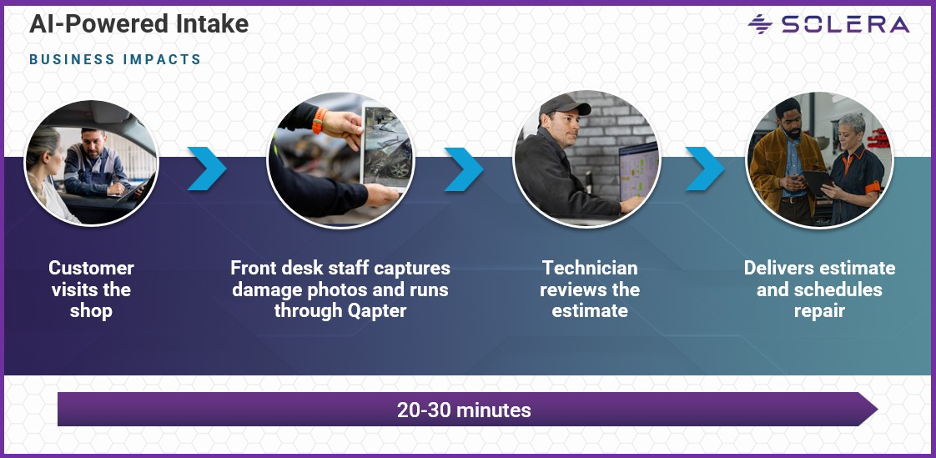
What sets Qapter apart is its seamless integration into Solera’s end-to-end SaaS ecosystem. From estimating and parts sourcing to repair management and customer communication, Qapter connects every touchpoint in the workflow. Brower highlighted how this unified approach empowers repairers to deliver high-quality service with speed and confidence, without sacrificing accuracy.
“AI isn’t replacing estimators,” Brower noted. “It’s amplifying their expertise and enabling smarter decisions at every step.”
Bill Brower’s appearance at SEMA’s I-CAR Live Stage came at a time when the collision industry is hungry for proven, scalable answers to new challenges. SEMA 2025 itself emphasizes VR-based technician training, hands-on demonstrations, and panel discussions with every major OEM, parts supplier, and service network—a sign that advanced digital workflows are moving from “nice to have” to “table stakes”.
Solera’s message is clear: Integrated AI is here, and it’s driving real results for every size of shop, every day. Qapter’s end-to-end approach aligns perfectly with the industry’s push for seamless, practical digitalization across the entire claims and repair ecosystem.
Click here to watch the full interview.
Ready to see Qapter in action?
Discover how AI-powered estimating can elevate your shop’s performance. Visit claims.solera.com to learn more, or fill out the form below to connect with our expert team.
Contact Us
The post Accelerating the Future: How Qapter AI Keeps Revolutionizing Collision Repair appeared first on Solera.
]]>The post Unify Your Dealership, and Simplify Every Interaction appeared first on Solera.
]]>If your day starts with five logins, two spreadsheets, and a round of “who owns this lead,” you’re not alone. Vendor sprawl slows dealers, creates blind spots, and adds friction your customers can feel. Solera’s Dealer Ecosystem replaces that Frankenstack with a single ecosystem of solutions so sales, service, F&I, marketing, and accounting move in step. Less swivel chair. More sold and serviced units.
Here’s the point: when your tools share one set of data, every interaction gets easier. Leads don’t die between CRM and the desk. Appraisals reflect live market truth. Service advisors see history without chasing paper. Payments and titling just happen. You free people to do the work that grows the store instead of babysitting systems.
From click to comeback — how it works
A shopper hits your website and submits a lead. DealerSocket CRM routes it instantly, triggers the right follow‑ups, and makes mobile desking easy. The deal flows into Auto/Mate Cloud DMS without rekeying. When that buyer returns for service, your Service Suite recognizes the customer, lets them book online in under a minute, and offers pickup and delivery. Advisors check them in, collect payment, and close the RO without a line at the cashier. The same record follows that customer from sales to service to their next trade, so you can market and retain with precision.
Dealers running this integrated flow report smoother handoffs and higher productivity across the board. For example, stores using Service Suite with pickup and delivery report 40%+ higher customer‑pay revenue per visit and near‑zero no‑shows. That’s the power of removing friction at every step.
What’s inside the Solera Dealer Ecosystem
DealerSocket CRM — Accelerate sales without burning your team out. Flexible nurturing, mobile desking, and automated follow‑ups help your managers tighten response times and your salespeople work smarter. Result: more kept appointments, shorter cycles, and higher CSI.
Auto/Mate Cloud DMS — A modern, open DMS built for profit and efficiency. No integration fees. 35+ OEMs supported. You own your data. Desk-to-contract is clean, reporting is clear, and the back office moves without bottlenecks.
AutoPoint Marketing — Launch targeted, on-brand campaigns in minutes. Use OEM‑ready creative plus automation that fills the showroom and the service drive. Right message, right channel, right time—built on your first‑party data.
Service Suite — One platform for in‑store and remote service: online scheduling to secure payment, with pickup and delivery built in. Shops see 40%+ lifts in customer‑pay and sub‑1% no‑shows when convenience is standard, not an exception.
LoJack — Turn connected cars into a profit center. Real‑time vehicle location and alerts support F&I penetration, streamline lot management, and unlock service‑to‑sales opportunities. Dealers report strong penetration rates, material ROI, and meaningful service push conversions.
Inventory+ — Profit‑driven inventory management. Appraise and price with live market data, follow your Ideal Inventory Model™, and syndicate with one click. You stock what sells and move aged units before they turn into interest expense.
Why consolidation pays off now
- Costs and complexity: Multiple vendors mean stacked fees, duplicate features, and finger‑pointing when data breaks. One platform cuts spend and speeds decisions.
- Inventory volatility: Floorplan and aging penalties punish slow turns. Live data and pricing discipline protect gross and cash.
- Staff turnover: New hires can learn one system fast. Fewer logins, fewer errors, faster time to productivity.
- Customer expectations: People want easy. Self‑service scheduling, pickup and delivery, and transparent communication keep them in your lane.
- Compliance and data privacy: Fewer handoffs and fewer exports reduce risk. You keep control of your data—and who touches it.
A simple plan to get started (this quarter)
1) Map your stack and costs. List every tool by department, monthly spend, and the jobs it’s doing. Circle anything that overlaps or lives in spreadsheets.
2) Pick your anchor workflows. For most stores it’s CRM→Desking→DMS on the sales side and Scheduling→Check‑in→Payment on the service side. Fix those first.
3) Connect identities and data. Make sure a single customer ID follows the shopper from website to CRM to DMS to Service. No duplicate records.
4) Set two or three hard KPIs. Examples: lead‑to‑appointment rate, days to line on used, customer‑pay RO average, no‑show percentage. Track weekly.
5) Pilot, then expand. Turn on one cross‑department flow (e.g., CRM↔DMS for sales; Service Suite from booking to payment). Document the wins and roll it to every rooftop.
This isn’t about ripping and replacing for sport. It’s about giving your teams more time, your managers clearer data, and your customers a better experience from day one. When the platform does the busywork, your people can spend more time building trust, solving problems, and closing business.
Ready to retire the Frankenstack? One ecosystem can do it all. See how Solera’s Dealer Solutions help real dealers save time, cut costs, and grow profit in every department. Request a demo and discover a simpler, smarter path to dealership success—because dealers thrive here.
The post Unify Your Dealership, and Simplify Every Interaction appeared first on Solera.
]]>The post LoJack Vehicle Recovery Case File: Parked in Plain Sight — 2019 Cadillac XTS (Denver, CO) appeared first on Solera.
]]>Case Snapshot
Vehicle: 2019 Cadillac XTS (approx. value $22,207)
Activation: Denver Police Department, Colorado (NCIC entry upon theft report)
Recovery: Denver Police Department, Colorado
Dealership/Installer: Foundation Chevrolet Cadillac, Wheat Ridge, Colorado (LoJack installed)
Vehicle Recovery Narrative
Some recoveries are quiet. The owner called it in; Denver PD put the vehicle into NCIC. The LoJack unit—installed by the selling dealer—began feeding coordinates to the LoJack LE app.
Officers followed the data to an apartment complex. The Cadillac was backed into a space, locked and unoccupied. The temporary tag was gone. The scene was processed for evidence, and the car was towed to secure storage.
The owner got the call every victim wants: your car’s been found, intact. Speed and coordination did the rest.
Tactical Takeaways for LE Partners
- Owner activated LoJack through the call center; DPD used the LE app for real‑time location.
- Vehicle located backed into a space, locked/unoccupied, temp tag missing—processed on scene.
- Tow to secure storage and owner notification followed department procedure.
See How LoJack LE Can Support Your Department
Every minute counts when recovering a stolen vehicle. LoJack’s Law Enforcement app provides real-time GPS tracking, allowing officers to act quickly and efficiently. Want to see how LoJack can support your department? Request a demo today to learn more about LoJack’s solutions for law enforcement.
The post LoJack Vehicle Recovery Case File: Parked in Plain Sight — 2019 Cadillac XTS (Denver, CO) appeared first on Solera.
]]>The post A People-first playbook: Putting AI to work in your dealership appeared first on Solera.
]]>Service demand starts stacking up at 7:30 a.m. and again at 4:45 p.m. Sales demand comes in waves. Meanwhile, your best people spend too many minutes on busy-work that doesn’t even move the customer forward.
This is where AI belongs in your store.
Not as a wall between dealer staff and buyers. Not as a shiny gimmick cobbled together by a company that was in a rush to get something, anything, on the market before anyone else. AI should be adopted carefully and with the explicit understanding that it is a force multiplier. That approach will give time back to the dealers who want to create real value.
The thesis on dealership AI

Dealership AI should empower your people, without positioning to arbitrarily replace them. If your dealership doesn’t need people to make the machine run, then the machine doesn’t really need your individual dealership, does it? Instead of focusing only on the potential cost-savings of replacing people, focus on the value-output; in other words, adopt AI technology that makes your dealership greater than the sum of it’s parts.
Let the software handle the chores that slow you down: data entry, appointment setting, lead cleanup, call summaries, after hours responses, missing doc flags and much more. Free your sales pros, advisors, and BDC to do what only people can do—provide clarity, trust, negotiation, coaching, and importantly: reading the room.
This should be the point. More attention for your customers, and less for your screens and keyboards.
Make the customer experience effortless
If customers feel less friction, from one end of the journey to the other, your team did it’s job to ensure they keep coming back to spend their hard-earned pay.
Used well, AI can anticipate and help meet your team’s needs, keeping the dealership voice consistent across all channels, and making next steps obvious. It doesn’t just add a layer of cold and sterile automation; it removes the extra clicks and callbacks that slow you down.
A practical and forward-thinking view of what AI in your dealership could look like
AI is not magic, and despite the best intentions of some- nobody wants to feel like they are being handed off to a robot when they are trying to purchase a vehicle. So, what does practical and responsible use of AI look like? For the most part, I would argue that it generally just looks like time-savings.
- Inventory and Sales: AI powered forecasting and dynamic pricing models will be able to accelerate your turn-times, help you acquire more 1st party trades, and boost your grosses.
- Service: AI powered schedulers optimize bay load, send repair status updates, and trigger parts ready notifications, reducing no shows and the dreaded “Dude, where’s my car?” calls.
- Intelligent Desking & F&I: Adapt finance structures in real time, auto-fill forms, flag missing stips, and generate compliant summaries so managers spend more time on earning trust (and PVR) in the box, and less on paperwork.
- An Omnichannel Marketing Revolution: AI analyzes and segments audiences, drafts variants, optimizes A/B’s, and ultimately allows your team to scale its communication strategy by delivering powerful and personalized 1:1 multi-touch marketing campaigns.
Store culture determines the outcome
Shiny new tools don’t fix a busted culture. You are not going to run out and buy a new piece to add to your software Franken-stack that will make up for bad processes and a lack of discipline.
The message to your team should be unmissable and repeatable: “We’re using AI to handle the grunt work so you can focus on your customers.” Then execute on that.
Start small. One workflow. Short pilot. Put your best foot forward to make it work.
Measure what matters. Time saved. Speed to lead. Show rates. Close rates. CSI. Dollars per RO. Turn and aged units, etc.
Iterate and refine with the people who live it. Advisors, BDC, desk managers, bring them all into the loop and keep them there.
Scale deliberately. When your analysis (and the team) says “greenlight”, move to the next workflow, and optimize.
That’s how you build trust instead of barriers and resistance.
Ask yourself, does this solution lead to better outcomes?
There are so many distractions and shiny objects popping up in this space over the last couple of years, but we should be asking ourselves: what is the actual output we hope to achieve with this adoption?
Variable ops
- Speed to lead and speed to first appointment.
- Show rate, demo rate, close rate.
- Front and back end gross, turn time, aged unit reduction.
Fixed ops
- Appointment adherence and bay utilization.
- Dollars per RO, one‑and‑done percentage.
- Advisor caseload and average time‑to‑update.
Desking & F&I
- Time to pencil, time in the box, document defect rates.
- Fund time and contract in transit days.
Marketing
- MQL to appointment rate, cost per kept appointment.
- Opt in growth and reply rates across channels.
What your people can do with the time saved
- Sales make one more meaningful conversation per hour. That’s compounding math.
- Advisors call customers with updates, before customers call them. Instant CSI boost.
- Managers spend less time hunting data and more time coaching.
- BDC clean up comms so customers feel seen, instead of just patronized.
AI Adoption missteps you want to avoid
- Buying platforms before building habits. Start with one use case, not a “stack.”
- Over automating the personal touch. Use AI to set people up—not to arbitrarily replace them.
- Skipping change management. Train, check in, retrain. Make it part of the cadence.
- Measuring everything and learning nothing. Pick the few metrics you’re willing to act on, and don’t lose sight.
Focus on the customer connection and win the AI race
AI is not the strategy. It’s a force multiplier for your strategy.
Car dealers that want to win in their market will treat AI as adaptive cruise-control, a co-pilot, rather than an autopilot. They will remove repetitive work. They will reinforce the human skills that make retail automotive great.
The advantage will go to dealers, and industry partners, who adopt and offer solutions that have purpose, This will allow them to protect their customer relationships, and never lose sight of the people who make it all happen.
What’s next in this space?
The most useful AI won’t just feel like another app. It will feel like a teammate.
The goal should not be Autonomous retail– which is a system that doesn’t really need dealers, or their partners, or many OEM’s for that matter. The real goal should be an augmented dealership where consistency and speed go up, and the human connection gets stronger.
At Solera, we are working to build for that future with a dealer first (and people first) view of the market.
The post A People-first playbook: Putting AI to work in your dealership appeared first on Solera.
]]>The post Coach the Middle 60%: Where Your Next 20% Growth Hides appeared first on Solera.
]]>The month our curve finally moved, we didn’t hire a unicorn and we didn’t invent a miraculous new comp plan. We simply put the effort into coaching the middle, and watched it pay back dividends. Back when I was running a BDC and a sales desk, the top 10% didn’t need a pep talk—and the bottom 10% also didn’t need a pep talk, but for different reasons. The real opportunity we were missing lived with the solid, coachable people hovering around the middle of the group.
As a leader now helping dealers modernize operations, my view hasn’t changed. In fact it’s only been further reinforced: coach the middle, and the whole curve moves. When that middle lifts, your forecast gets quieter, your closes get cleaner, and the month stops coming down to two hail‑Mary Saturdays.
Why the middle sets your ceiling
Your middle 60% performers determine how predictable your month is going to be. Stars carry spikes; but the middle carries the plan. Most of the friction that holds them back isn’t talent—it’s clarity, repetition, and handoff (or TO’s to be more precise). In the showroom, that looks like slow response times, missed second touches, customers repeating themselves on every call, and deals that “restart” over simple things that could’ve probably been avoided with better qualification early on. The good news: these things are fixable with standards, practice, and technology that removes friction instead of adding tediousness. Move the middle and you’ll raise the ceiling, because the middle is the true ceiling.
Find your middle (and what’s blocking them)
Start by identifying the people who are close: advisors and reps who are at 85–95% to goal, month after month. Then inspect the work, not just the results.
– Sales/BDC: response time to new leads, second‑touch rate, appt‑set → show, pencil‑to‑close.
– Service: calls answered in under 20 seconds, schedule fill rate, show rate, RO per advisor, promise‑time accuracy.
When I look at these sorts of metrics inside Solera’s DMS and CRM user base, patterns jump out. The middle needs specific plays, fewer systems to click through, and smoother handoffs between BDC ↔ and sales advisors. They don’t need more pressure; they need less friction. Establish a baseline, highlight one or two chronic bottlenecks, and make them the next 30‑day priority. That alone brings calm and focus to the floor.

The coaching system: clarity → reps → feedback
Clarity beats charisma. Give every role a one‑page standard. For example: “New lead = response in 10 minutes, two touches on day one, specific close steps by day two.” In service: “Answer by 20 seconds, confirm VIN and concern, offer the first open appointment and pickup/delivery option, confirm promise time.” Then just practice it. Ten‑minute huddles during the morning meeting. Two call reviews per person using actual transcripts. One behavior to improve per week, it’s all of these little steps that will amount to big movement.
Close the loop with simple scoreboards. In Solera CRM and DMS, I want managers to see today’s response times, second‑touch compliance, appointment show rates, and RO dollars at a glance. Weekly one‑on‑ones should target one behavior tied to one KPI, with one agreed experiment before the next check‑in. On a busy Saturday, everything can feel like a priority. That’s exactly why we pick one.
The goal shouldn’t be a motivational speech or a chorus of throwaway one-liners to test on working deals; it’s a repeatable operating rhythm the middle can live in every week of the year.
When your process is iron-clad and your technology partners remove tedious and forgettable work, the middle has more time and energy for the human work—listening, setting expectations, and following through. That’s where customer experience and compliance both improve.
Lead by example and build diverse teams
My career crossed the showroom, the BDC, and national leadership roles in automotive technology. The common thread behind every performance jump wasn’t a speech, it was standards, reps, and removing friction. Diverse teams make this a lot easier. Different backgrounds mean different ways to overcome objections, build trust, and see the whole customer journey.
Managers & leaders, go first: make calls with the team, review transcripts in the huddle, and share one “miss →fix” story every week. Create psychological safety so people try new behaviors without fear of getting roasted.
This level of consistency from leadership turns sporadic coaching into culture.
Amanda Acio is Senior Vice President, Dealer Solutions at Solera, leading growth and client success across sales, service, and digital retailing. A former BDC and sales manager at Serramonte Ford and Novato Ford, she later led sales teams at the top SaaS companies in Automotive. She brings over two decades of front‑line retail and SaaS leadership, known for pragmatic execution, building diverse high‑performance teams, and deploying road-tested strategies to grow revenue and better serve her customers.
The post Coach the Middle 60%: Where Your Next 20% Growth Hides appeared first on Solera.
]]>The post LoJack Vehicle Recovery Case File: Synthetic Identity, Real Consequences — 2020 Audi Q7 (Sumner, WA → Santa Barbara, CA) appeared first on Solera.
]]>
Case Snapshot
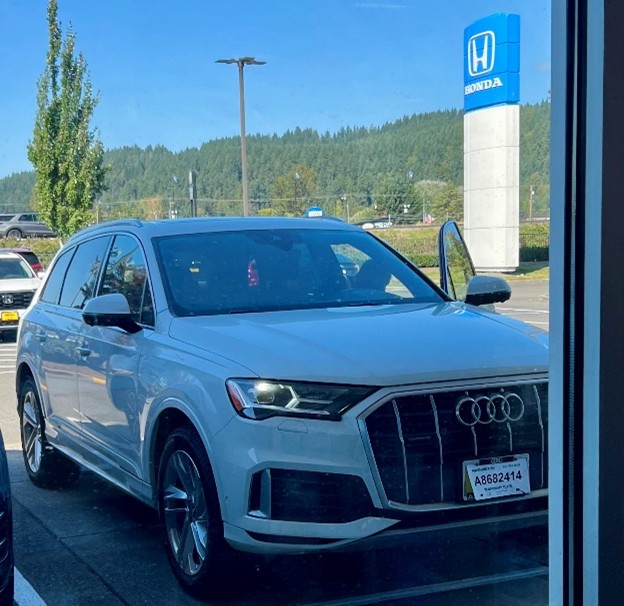
Vehicle: 2020 Audi Q7
Activation: Sumner Police Department, Washington (NCIC entry after fraud confirmed)
Recovery: California Highway Patrol, Santa Barbara, California
Dealership/Installer: Honda of Sumner, Sumner, Washington (pre‑installed LoJack)
Vehicle Recovery Narrative
On paper, the buyer looked legitimate. In reality, the ID was synthetic and the financing fraudulent. When the dealership put the pieces together, they shut off the vehicle’s app access and saw what mattered most—the Audi’s location, hundreds of miles away in Santa Barbara.
Sumner PD entered the VIN into NCIC. I confirmed the stolen entry and added the vehicle to LoJack LE so officers downrange could see it live. California Highway Patrol traced the last known point to a casino and teamed up with security on site.
Working off the dealership’s photo of the fraudulent ID, facial recognition led CHP to the suspect inside the casino. The arrest was clean. A search incident to arrest turned up a dozen more fraudulent IDs. The Audi was impounded for safekeeping and slated for return to the dealership.
Fraud doesn’t need a chase to be dangerous. It only needs time. Real‑time tracking and cross‑agency cooperation closed that window.
Tactical Takeaways for LE Partners
- Dealer confirmed synthetic‑ID fraud; app access revoked revealed the vehicle’s out‑of‑state location.
- NCIC entry followed by LoJack LE activation gave CHP live tracking data.
- Casino partnership and facial recognition led to the suspect’s identification and arrest; multiple fraudulent IDs recovered.
See How LoJack LE Can Support Your Department
Every minute counts when recovering a stolen vehicle. LoJack’s Law Enforcement app provides real-time GPS tracking, allowing officers to act quickly and efficiently. Want to see how LoJack can support your department? Request a demo today to learn more about LoJack’s solutions for law enforcement.
The post LoJack Vehicle Recovery Case File: Synthetic Identity, Real Consequences — 2020 Audi Q7 (Sumner, WA → Santa Barbara, CA) appeared first on Solera.
]]>